Sourotí
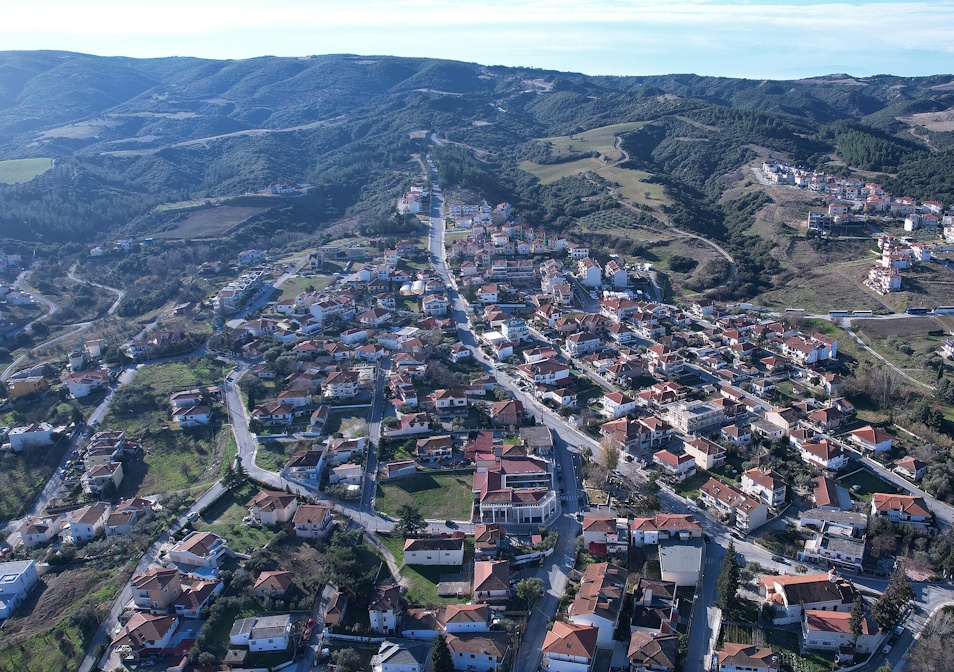
Souroti (Greek: Σουρωτή) is a rural village in the Thessaloniki regional unit of Greece, located 25 kilometers (16 mi) outside of the city of Thessaloniki. In Greece the village is particularly known for the mineral water bottled there. Administratively it belongs to the municipality of Thermi. The Monastery of Saint John the Theologian is situated there, associated with the name of a famous Eastern Orthodox Saint of the 20th century, St. Paisios of Mount Athos
History
Souroti is an immigrant's village, one of the many that were established in Greek Macedonia after the Balkan Wars and the population exchange between Greece and Turkey. Shortly before 1912 the area was called "Surukli" (from the Turkish suru which means herd) and was owned by five Turkish land owners (Τσιφλικάδες) who sold their land to Jews from Thessaloniki.The first Greeks that settled in the area were a vlach family from Vlatsi (after 1927 Vlasti) of the Kozani regional unit, the Christos Lolas' family. Although they were originally shepherds, the family sold their sheep to buy the land from the Jews. In October 1913, 40 families consisting of Arvanites from Mandritsa (Μανδρίτσα) settled in the village, following a Bulgarian invasion in their home village. Their primary occupation was sericulture and they moved to Souroti to take advantage of the local mulberries. At the same time they maintained trade bonds with Jewish silk producers in Thrace. In 1922, after the population exchange between Greece and Turkey about 48 families arrived from Asia Minor originating from İzmir (Σμύρνη), Aydın (Αϊδίνιο), Cius (Κίος), Mudanya (Μουδανιά) and also from Eastern Thrace. Those were educated and they carried their own traditions. In Souroti they worked in sericulture, olive oil production and vine dressing. Between 1928 and 1930 more vlach shepherds came from Vlasti along with 4-5 families of Sarakatsanoi (Σαρακατσάνοι). Land was distributed to the immigrants by the Greek state first in 1914 and later in 1932.
 |
 |
Left: Souroti in the municipality of Thermi in Thessaloniki
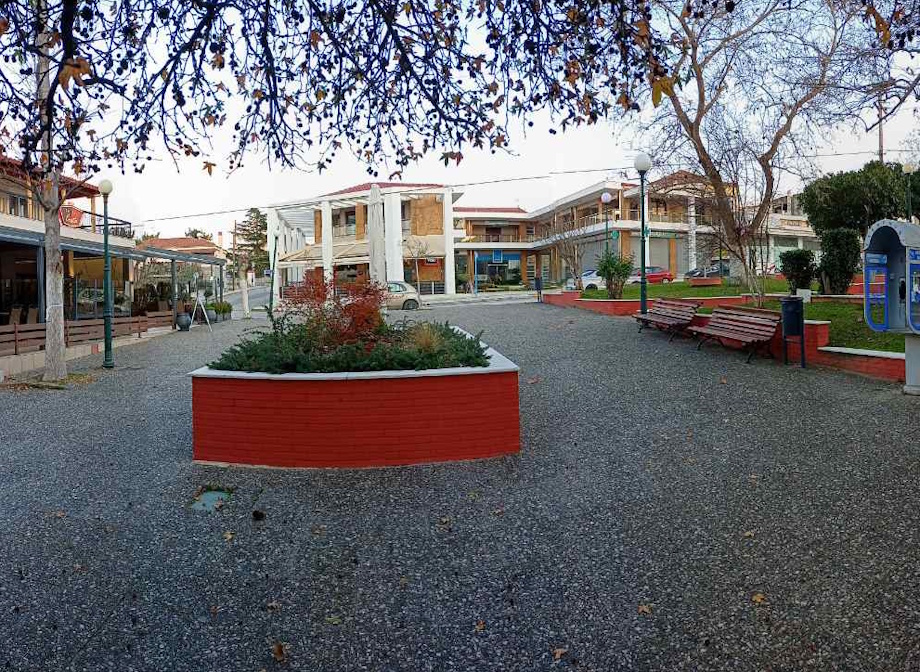
Right: The central square of Souroti
Modern establishment
The community of Souroti was officially established and recognized by the Greek state on Sep. 20th, 1947. Since then the village, whose main productive activities were agriculture and bottling of mineral water, has undergone steady development. In 1997 during a major reorganization of local self-government initiated by the Greek government called "Kapodistrias plan", Souroti merged with the municipality of Vasilika along with Ag. Paraskeyi, Ag. Antonio, Libadi, Monopigado and Peristera. In 2011 with the Kallikratis plan, Vasilika merged with the municipality of Thermi. Nowadays people from the nearby Thessaloniki are moving to the area around the village which is expected to turn into a suburb of Thessaloniki.
Discovery of the mineral water spring
While still part of the Ottoman Empire, the area around today's bottling factory was a swamp, and the spring of mineral water unknown. During the 1915 military campaigns of the First World War, the French troops that camped at the then called Surukli mapped the spring and built a rudimentary bottling facility. In 1917 Serbian troops camped there and they too built a new bottling facility. They called the water "Sour Water" (Serbian Latin: Kisela Voda, Greek: Ξινό νερό). The Lolas family appropriated and refurbished the facility in 1918. In 1925 George Chonaios took over the Lola's enterprise. Chonaios had the facility work as a private enterprise, however he allotted 5% of the profit to the local community. In 1998 the company went public. Since then it exhibited rapid development and became one of the most popular mineral water brands in Greece.
Saint Paisios – Monastery of Saint John the Theologian in Souroti
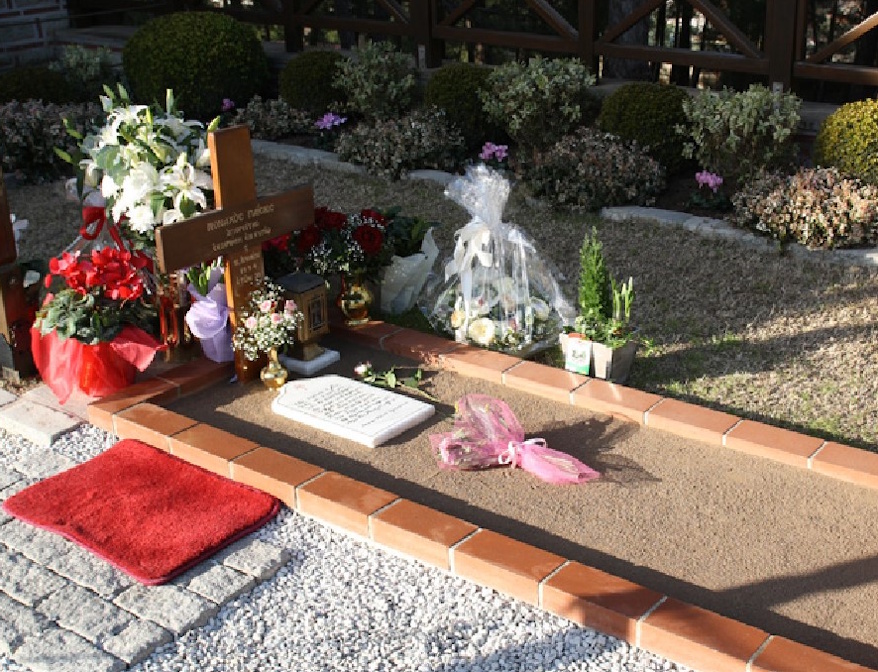
The spiritual leader of the monastery of Saint John the Theologian was Saint Paisios. In the summer of 1966, due to his deteriorating health, Elder Paisios traveled to Thessaloniki for examination. The examinations revealed that he needed lung surgery, and he was admitted to the Center for Thoracic Diseases of Northern Greece. It was then that he met some young women who had wanted to establish a monastery for years but had encountered difficulties. The young women visited him daily. From that moment on, the Elder considered them his sisters and resolved to help them. He found a place where the monastery could be built, and within a year, the first sisters had settled there. Thus, the Hesychasterion of Saint John the Theologian was founded in Souroti, Thessaloniki, and Elder Paisios served as its spiritual leader until his death on July 12, 1994.Paisios was buried in the Holy Monastery of Souroti, and since then thousands of faithful Christians from Greece, but also from all Orthodox countries where he is very popular, have visited his grave to pay their respects.
Saint Paisios of Mount Athos (Greek: Ἅγιος Παΐσιος ὁ Ἁγιορείτης; secular name: Arsenios Eznepides (Greek: Ἀρσένιος Ἐζνεπίδης), born 7 August 1924 was a Greek Eastern Orthodox ascetic from Mount Athos, originally from Pharasa, Cappadocia. Today, he is widely venerated by Eastern Orthodox Christians, particularly in Greece, Romania, Russia, Serbia, Montenegro and Syria.
Paisios was canonized on 13 January 2015 by the Holy Synod of the Ecumenical Patriarchate, and the church commemorates his feast day on June 29 [OS] / July 12 [NS].
 |
 |
Left: The Tomb of Saint Paisios from Mount Athos
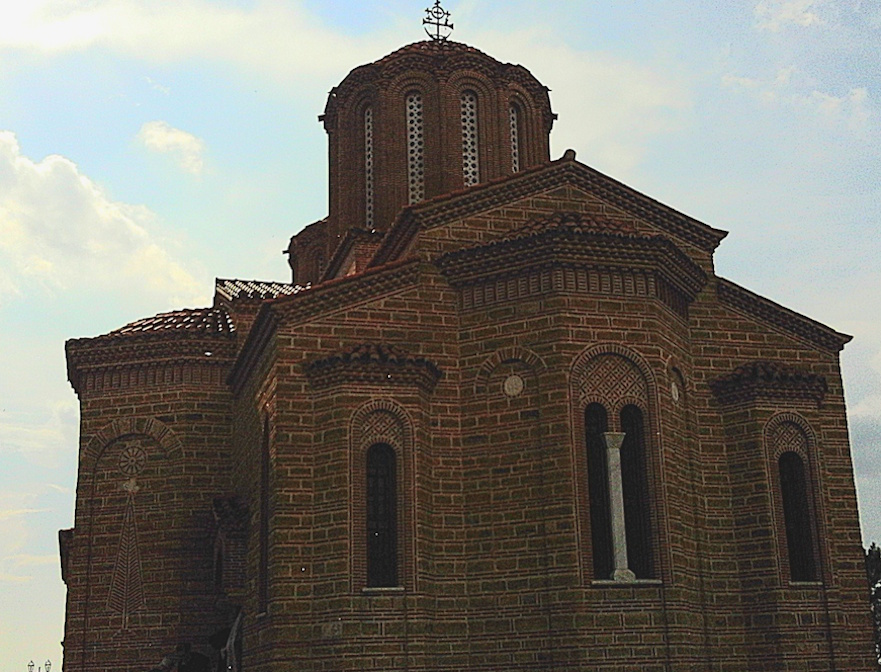
Right: The Cathedral of the Monastery of Saint John the Theologian