SIGHTSEEING ATTRACTIONS
Thessaloniki is an open-air museum. Every stroll through this beautiful northern Greek city reveals a new aspect of its centuries-old history to the traveler. Ancient remnants, Roman influences, and Byzantine splendor combine to create a mosaic of unparalleled charm. UNESCO has declared 15 early Christian and Byzantine sites in Thessaloniki World Heritage Sites, thus recognizing the city as one of the most important for the historical memory of mankind.
White Tower – the landmark of Thessaloniki
Seeing the White Tower means having undertaken one of the most fascinating journeys and being in Thessaloniki, the city of a thousand promises. Without a doubt, the White Tower is the city's most famous landmark. Imprinted on every possible memento, photographed from every angle, in every season and at every hour of the day, it represents an impression in the collective unconscious, an archetypal image. With his cylindrical shape, his six stories, and his storied history, he is the city's landmark.
The exact construction date is lost to history. The initial hypothesis that he was a Venetian structure is not shared by archaeologists. Most likely, the tower was built in the early Ottoman period, sometime after 1530. It is assumed that the architect of this massive fortification was Mimar Sinan, who also built the Valona Tower in Albania, which is very similar to the White Tower. What is certain is that the imposing structure was built on the site of a pre-existing Byzantine building.
Rotunda – the center's main attraction
The Rotunda of Thessaloniki: originally a mausoleum of Galerius, it was converted into a Christian church of the Incorporeal in Byzantine times and dedicated to Saint George after 1912.
The Rotunda is one of Thessaloniki's most impressive buildings. As its name suggests, it is a circular structure; it impresses with its architectural power and the exquisite artistry of its sacred interior.
The rotunda was built in the 4th century AD by Emperor Galerius. It was part of a large building complex that also included a hippodrome and a palace. With the spread of Christianity, the rotunda served as a place of martyrdom, that is, as a cult site for the relics of martyrs who fell in sports. Their mosaics are comparable in beauty and expressiveness to those of Ravenna. They were created in Thessaloniki and are the oldest surviving examples of Oriental mosaic art.
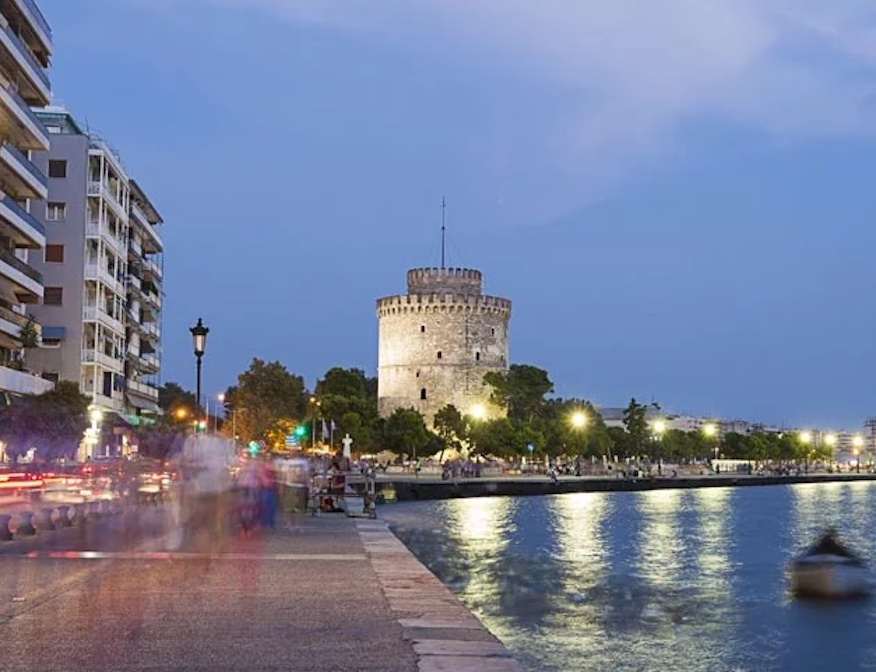 |
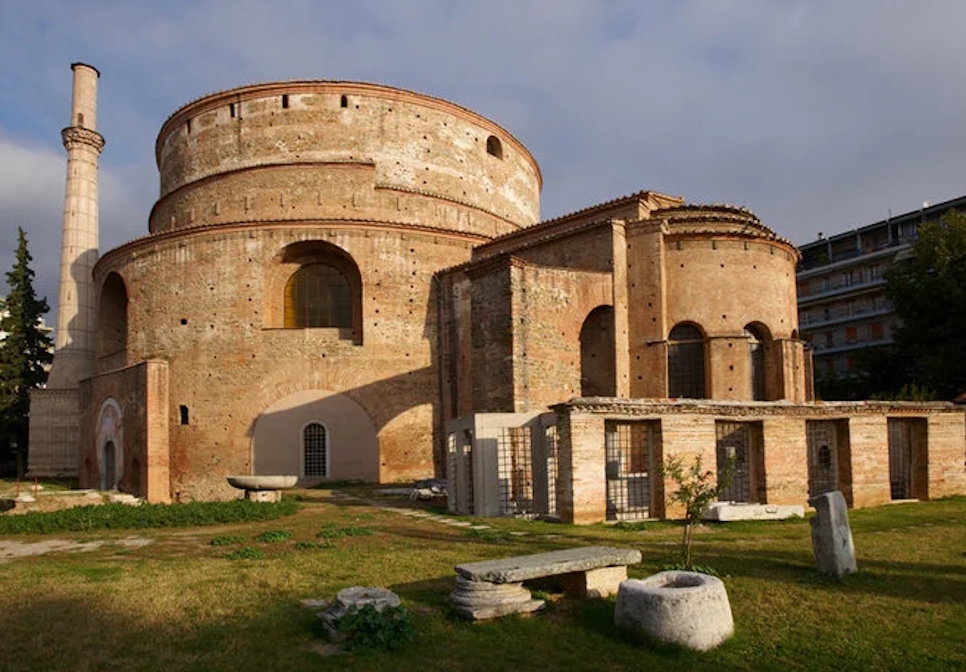 |
Left: White Tower
Right: Rotunda
Saint Demetrius – the patron saint of Thessaloniki
The magnificent Church of Saint Demetrius is located on the street of the same name. It is a five-aisled basilica with a transept. The painted and marble-decorated church is of exceptional artistry. The present church was built in the 7th century AD by Bishop John on the ruins of an older church.Saint Demetrius is the patron saint of Thessaloniki. The relationship between the inhabitants of Thessaloniki and the saint is very close. His relics, which were kept in the Abbey of San Lorenzo in Campos, Italy, returned to Thessaloniki in 1978. In the basement of the church and in the crypt there is a permanent exhibition of the sculptures, capitals, breastplates and other relics of the church.
Hagia Sophia – the eternal church
Hagia Sophia was built in the 8th century AD on the site of an older church, which was destroyed by an earthquake. Since then, it has been a spiritual beacon of Thessaloniki, operating continuously. It is of basilica type with a dome. The mosaics, frescoes and icons of the church are of unique beauty.
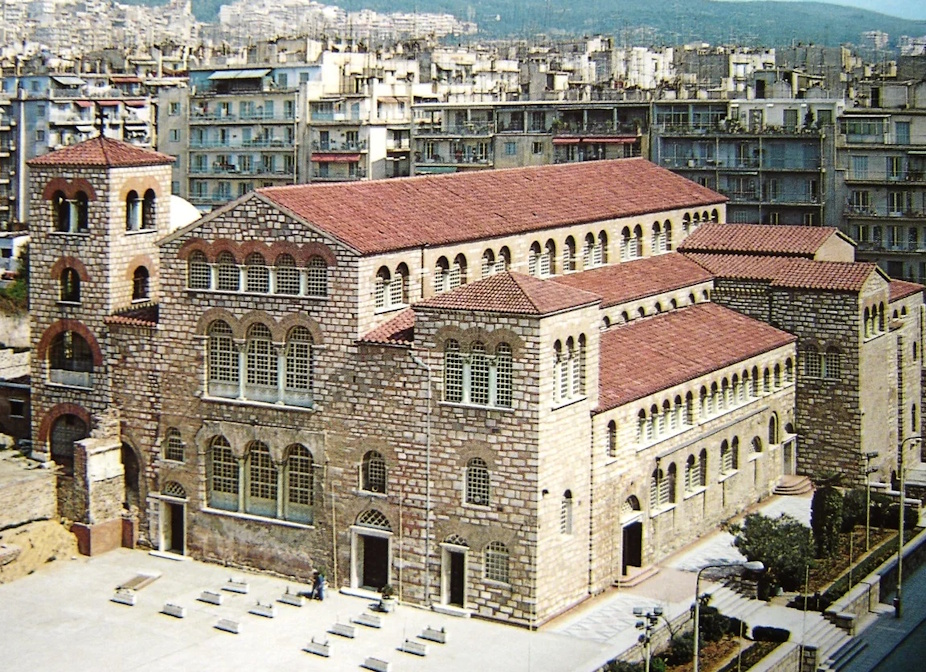 |
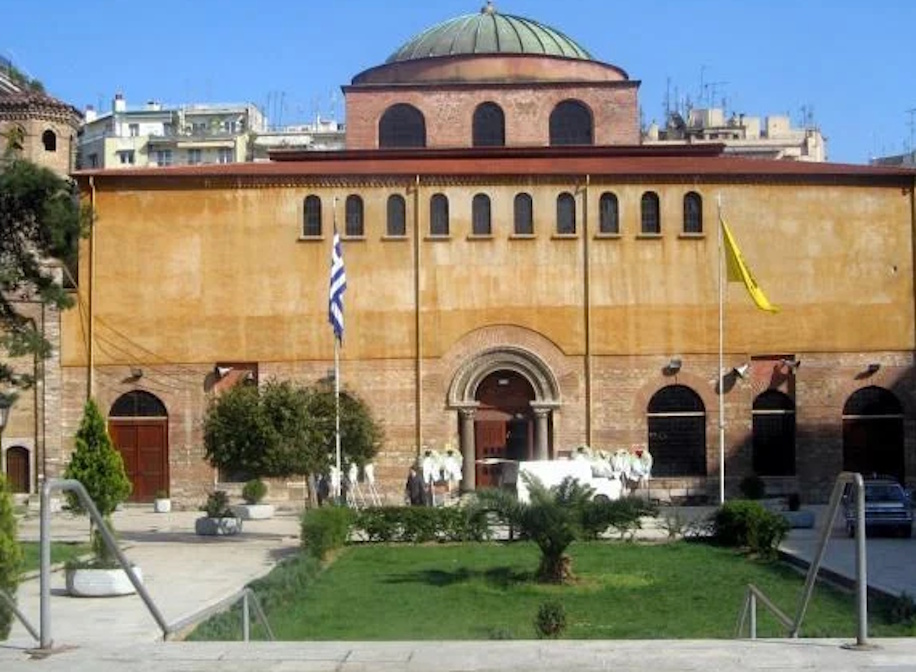 |
Left: Church of St. Demetrius
Right: Cathedral of Divine Wisdom (Hagia Sophia)
Panagia of Chalkeon – the “red church”
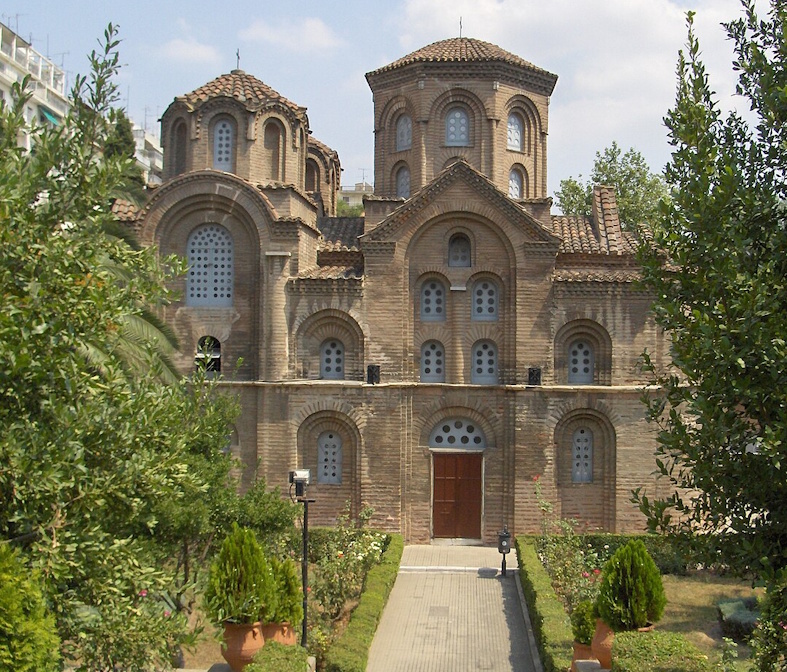
According to the founding inscription, the Church of Panagia of Chalkeon was built in 1028 by the Protospatharios Christopher, the Katepano – that is, the Master – of Lombardy. It is located on the site of the ancient agora.The church's masonry consists of bright red bricks, hence its nickname, the "Red Church." It belongs to the classic Byzantine style and features four columns and three domes. Its facade is decorated with arches and pilasters, giving it a graceful lightness. The pieces carved from marble have remained intact to this day, as have the frescoes that adorn them.
 |
 |
Left: The Church of Panagia of Chalkeon
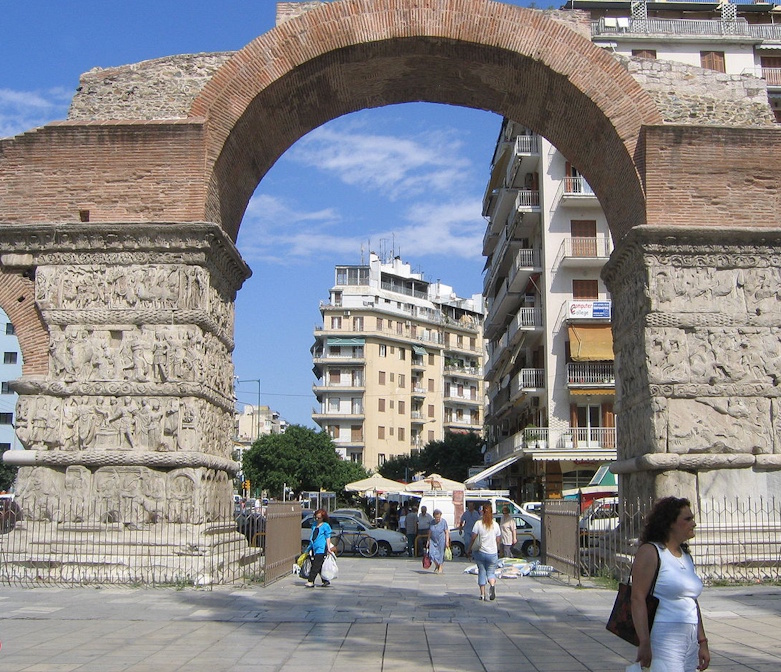
Right: The Arch of Galerius, known as the Kamara
Church of Saint Panteleimon – the sanctuary in the heart of the city
The magnificent church of Agios Panteleimonas is located in the center of Thessaloniki, at the intersection of Egnatia and Iasonidou streets. Its construction dates back to the late 13th century AD.The church is identified with the Panagia Perivleptou Monastery, also known as Kir-Isaak Monastery. The frescoes of the deacon's quarters and the presbytery are all that remain of the original decoration.
Church of the Holy Apostles – solemn unveiling
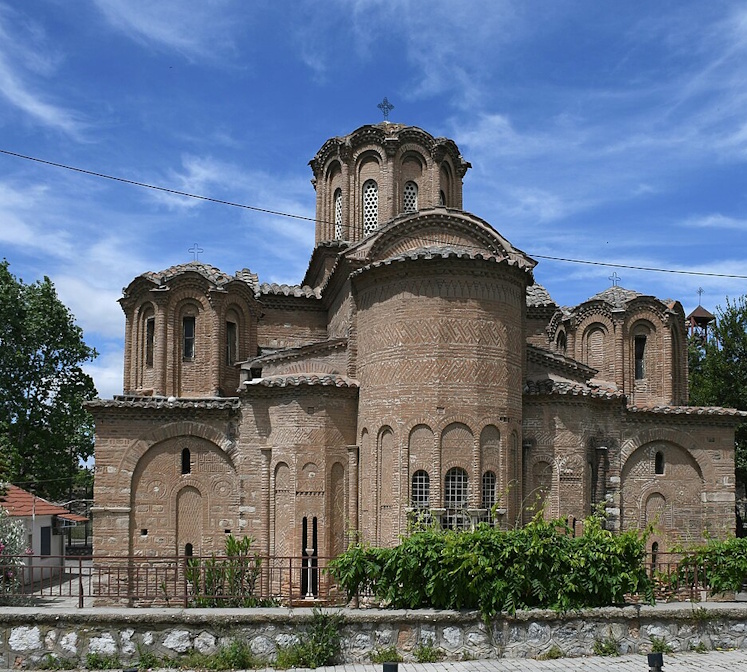
The Church of the Holy Apostles is an outstanding example of sacred architecture from the Palaiologan period. It was originally the main church of a monastery dedicated to the Mother of God. It is located at the beginning of Olympos Street in western Thessaloniki. It was built in 1310 by Ecumenical Patriarch Niphon I.During the Ottoman period, the church served as a mosque, and the frescoes were covered up after the removal of the golden mosaics. Beginning in 1926, the gradual removal of the plaster gradually revealed the legends of the saints. In 2002, the magnificent decoration was fully restored, and the church shone in all its splendor.
 |
 |
Left: The Church of the Holy Apostles
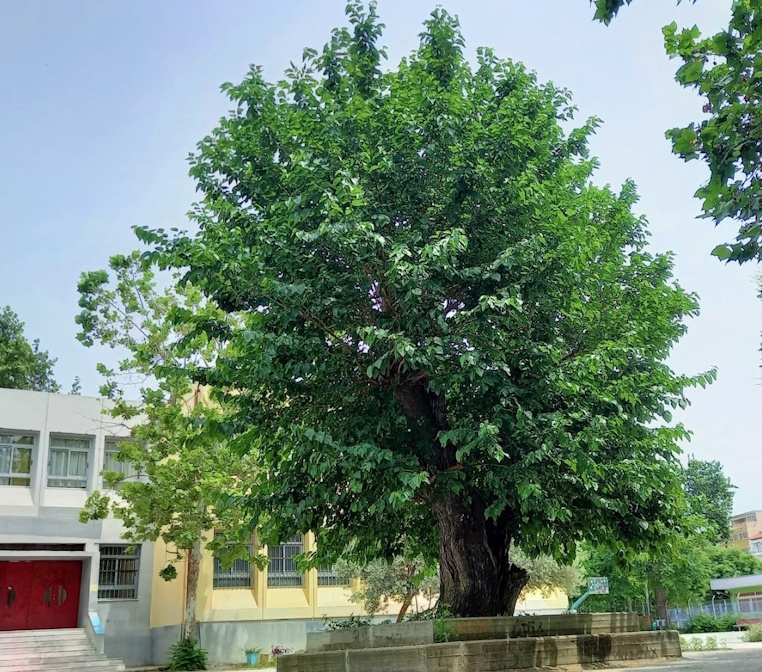
Right: Xirokrini: The oldest tree in the city is the 300-year-old mulberry tree in the courtyard of the 16th-century lyceum.
Saint Nicholas the Orphan – the mysterious church
Agios Nikolaos the Orphan war eine Metochi und Katholikon des Vlatadon-Klosters. Sie befindet sich in der Oberstadt an der Ostmauer. Die Innenausstattung der Kirche zählt zu den am besten erhaltenen Malereiensembles in Thessaloniki. The liturgical cycle, the miracles of Christ, numerous hagiographies of the Virgin Mary and the saints adorn Agios Nikolaos with extraordinary art and create a devout atmosphere and aesthetic sensibility.
Saint Catherine – the power of the Macedonian school
The Macedonian school of iconography represents a special chapter in the history of Byzantine art. The icon painters of Macedonia are distinguished by the chromatic intensity of their compositions as well as by a completely unique depiction of the human body, which they portray as strong and powerful, as the true abode of the spirit. St. Catherine's Church, like other churches in Thessaloniki, was painted by artisans in the Macedonian style. The church's exquisite paintings captivate visitors with their power and intensity.
Our Lady of the Most Holy Trinity – under the care of Anne of Palaiologos
Thessaloniki was an important center of Hesychasm and a spiritual center of the Christian Renaissance. Charismatic figures such as Gregorios Palamas and the monks Dorotheos and Markos Vlatis, the founders of the Vlatadon Monastery, were active in the city of Thessaloniki. Fostering religious sentiment was of strategic importance for the survival of the empire. For this reason, the infamous Anna of Palaiologos personally traveled to Thessaloniki and helped with the restoration of old churches and the construction of new ones. The Church of the Redeemer was built during this period. The church stands intact in the northern part of the upper town.
Vlatadon Monastery – under the protection of the walls of Eptapyrgios
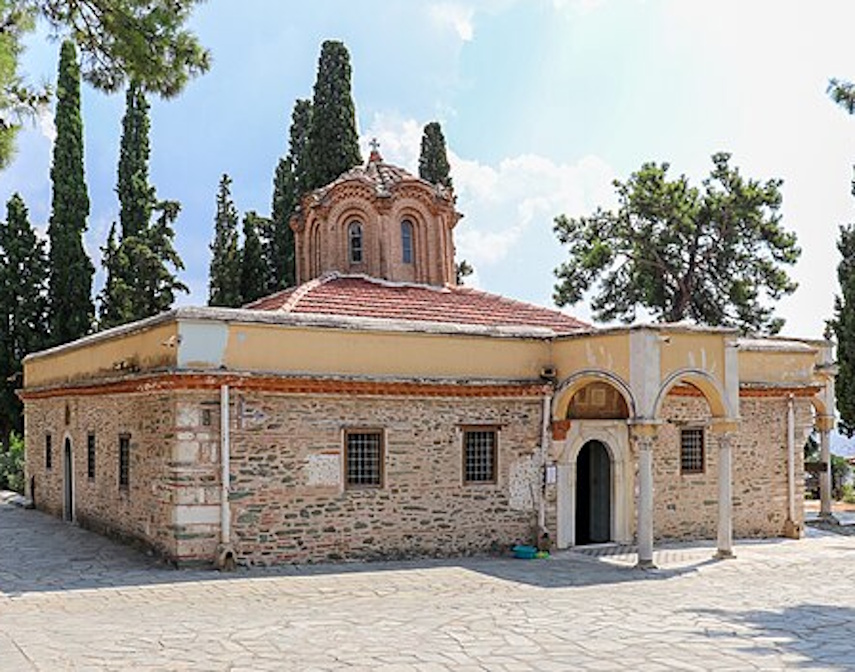
The Vlatadon Monastery, also known as the Tsaous Monastery, is located in the upper town, just 80 meters from the walls of Eptapyrgio. According to tradition, the monastery was built on the site where the Apostle Paul taught during his stay in Thessaloniki. It is the only Byzantine monastery still in operation today. The Russian traveler Ignatius of Smolensk mentioned the monastery complex in 1405. The monastery reached its peak in the 15th century AD, and during the Ottoman period it likely served as an Islamic place of worship.
 |
 |
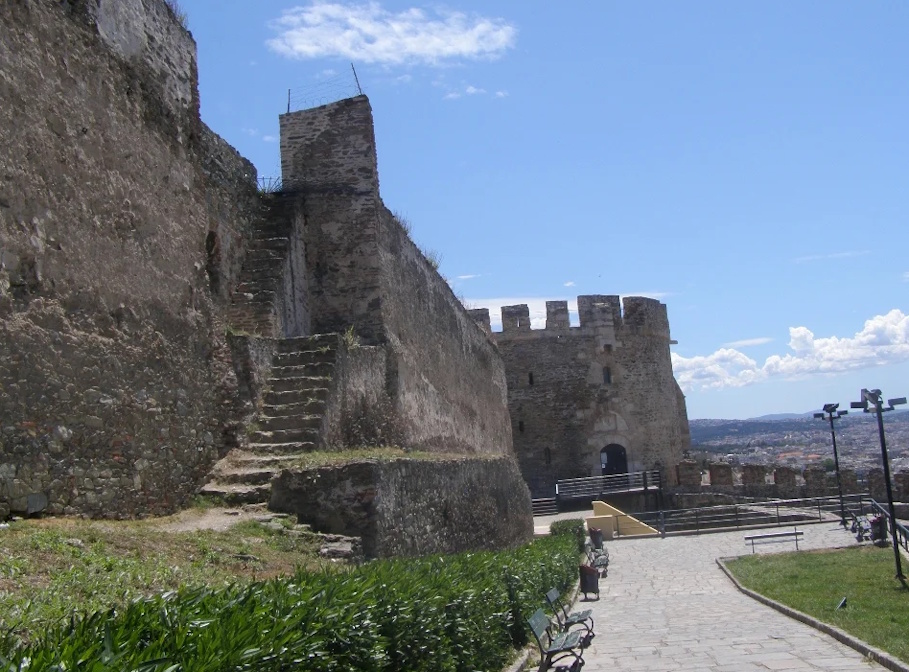
Left: Byzantine Wall
Right: Monastery Vlatadon
Prophet Elijah – Byzantine Jewel
The Church of the Prophet Elijah is located in the upper town at the intersection of Olympiados and Prophet Elijah streets. Built on a natural hill, it once dominated the cityscape of Thessaloniki. It belongs to the Athos architectural style and is distinguished by its ornate dome and elaborate ceramic decorations. The church was restored between 1956 and 1961. The style of the magnificent frescoes that adorn it influenced the later Serbian school.
Byzantine Baths
The Byzantine baths of Thessaloniki are the only surviving example of their kind in Greece. Located in the upper town, nestled among tall buildings, they were built in 1300 AD and operated continuously for seven centuries. Operations ceased only in 1940, which is why the baths are still considered a "living" part of the city's social history.
The walls of Thessaloniki – history in stone
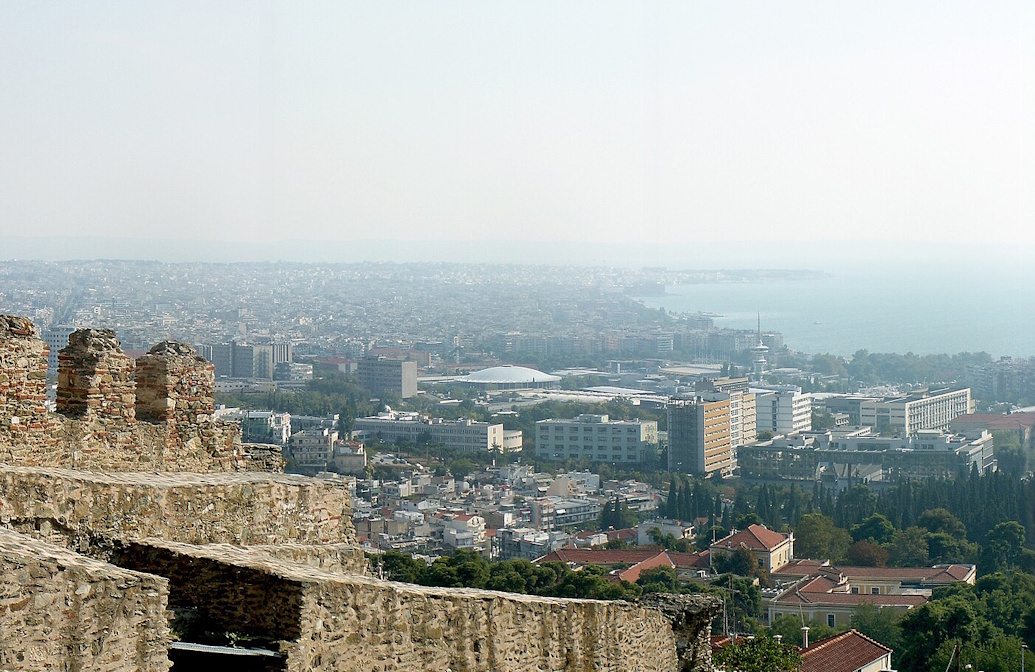
The Byzantine city walls of Thessaloniki are identical to the Roman ones. The city was protected from raids by Thracian tribes in the 1st century BC. Its history is inextricably linked to its city walls. With their many towers, frequent restorations, and constant maintenance by the Thessaloniki administration, they have always embraced the lives of the people in their stone embrace.The Seven Towers, dominating the northeastern edge of the walls, are among the most striking fortifications in the Balkans. The enclosed core of the castle was completed in the Middle Byzantine period. Today, its interior has been renovated and it is under the administration of the Ministry of Culture. The Trigoni Tower, along with the Vardar Tower and the White Tower, was one of the strongest fortresses of the Ottoman Empire. The view from its grounds is among the most beautiful in Thessaloniki. Travelers never miss the opportunity to climb up to Kastra, as the area is known, to admire the bustling city stretching to the Thermaic Gulf and to feel the magic of its rich history.
 |
 |
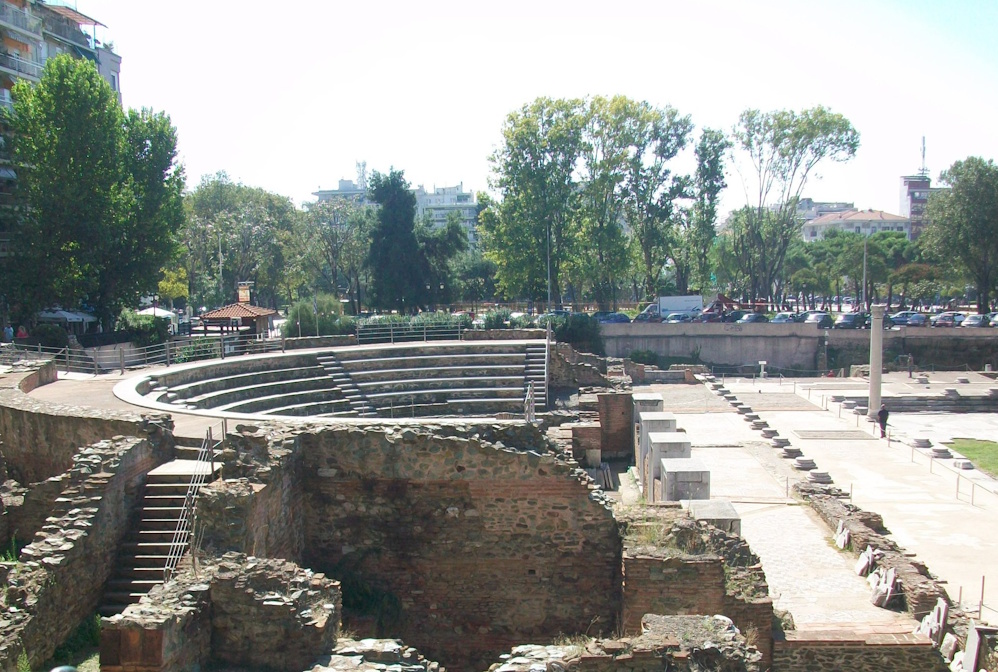
Left: Roman Forum of Thessaloniki.
Right: View of the city center from the Byzantine walls.
Archaeological Museum of Thessaloniki
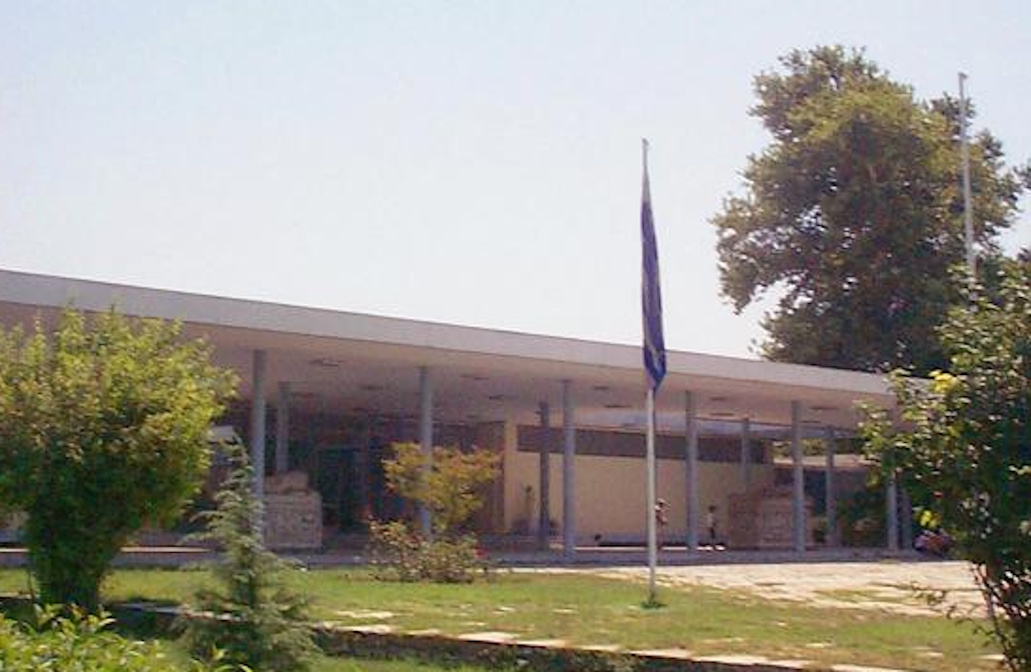
The Archaeological Museum of Thessaloniki was founded in 1912, and the current museum building was inaugurated on October 27, 1962, the day of the celebrations marking the 50th anniversary of the city's liberation. It was designed by the architect Patroklos Karantinos.
 |
 |
Left: Archaeological Museum of Thessaloniki
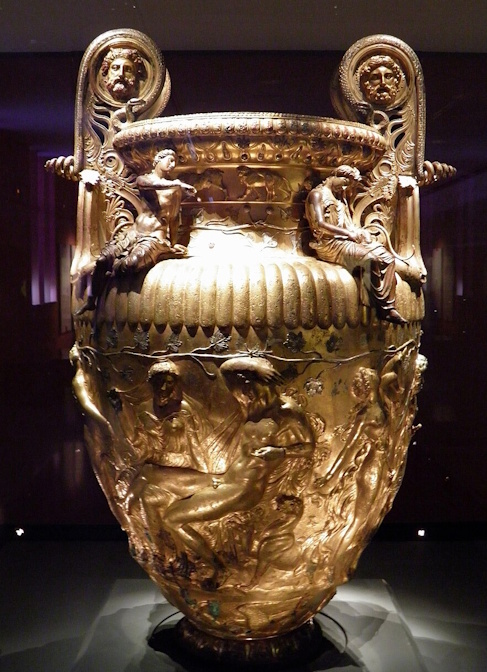
Right: The Derveni crater, Hellenistic period, 330–320 BC, Archaeological Museum
 |
 |
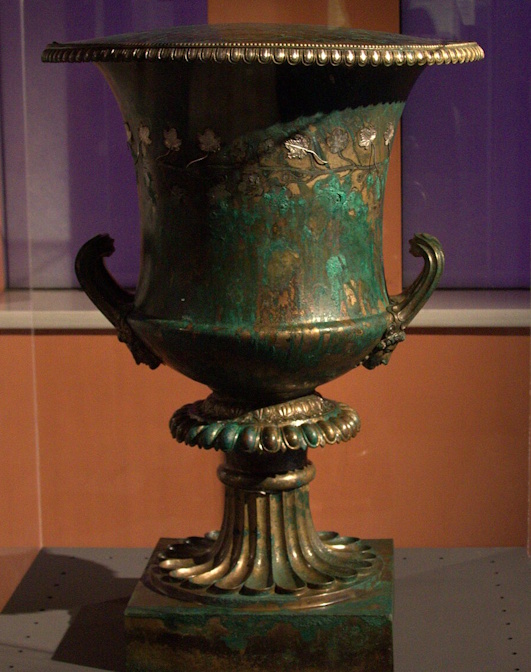
Left: Chalice-shaped bronze krater, work of a Macedonian workshop. Circa 370 BC.
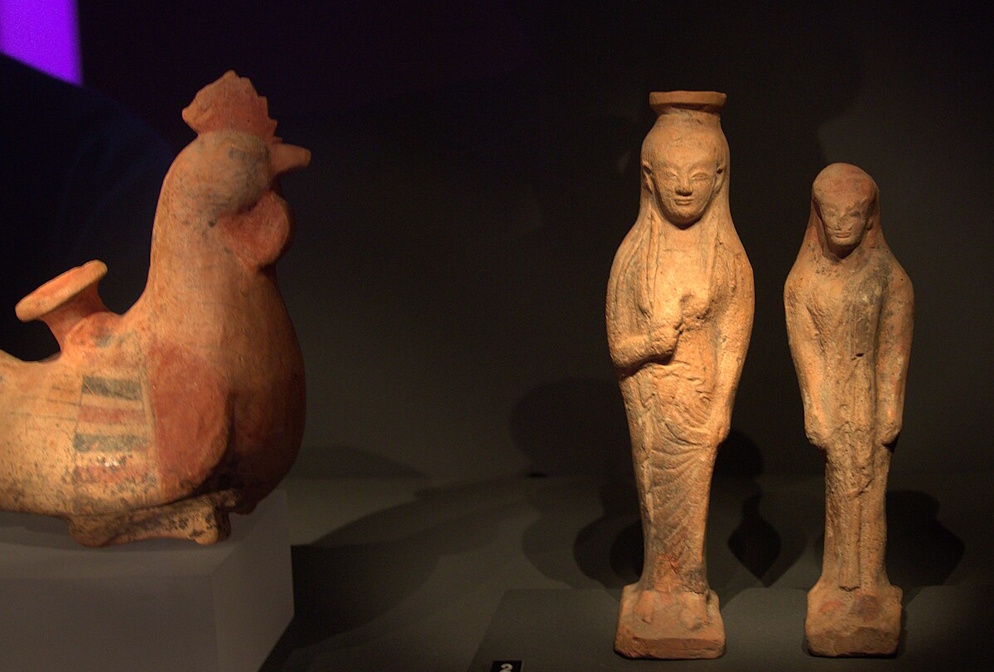
Right: Clay perfume container. Sindos cemetery, man's grave. Circa 540 BC.
Museum of Byzantine Culture of Thessaloniki
It was awarded the Museum Prize by the Council of Europe in 2005 and houses a rich collection of works and relics of Byzantine and post-Byzantine art.
Museum of the White Tower
This is the Museum of the City of Thessaloniki.
Museum of the Roman Forum
The cave museum in the ancient agora houses artifacts from the region.
Museum of the Macedonian Struggle of Thessaloniki
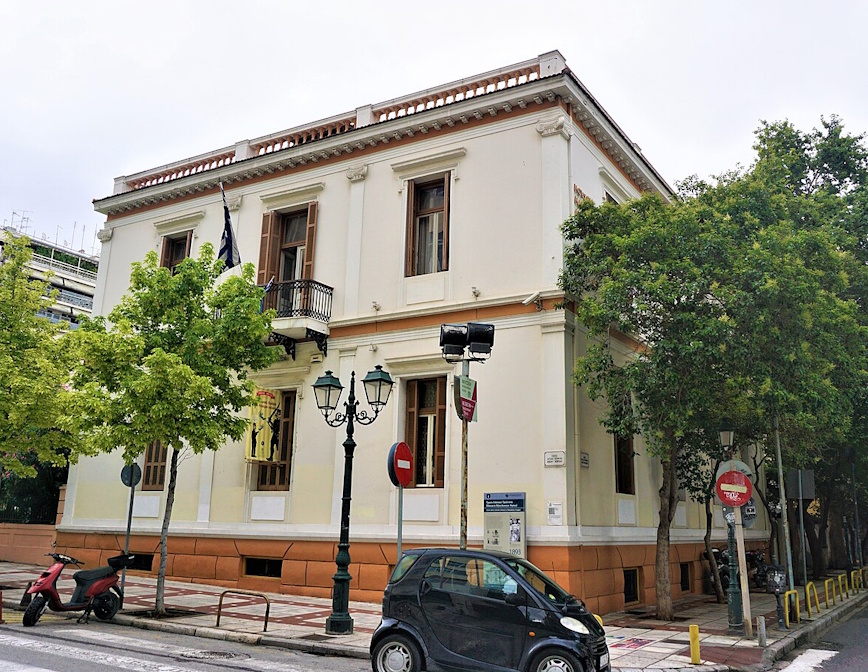
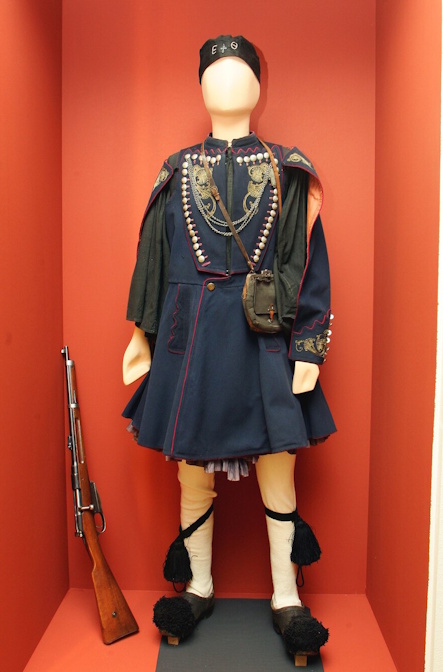
The Museum of the Macedonian Struggle is located in the center of Thessaloniki, on Proxenou Koromila Street, next to the Metropolis building. It is housed in a neoclassical building designed by Ernesto Ziller, based on a donation from Andreas Syngrou. The same building also contains the Center for Research on Macedonian History and Documentation.
 |
 |
Left: Museum of the Macedonian Struggle
Right: Uniform of a Macedonian fighter
Ethnological Museum of Macedonia-Thrace
The city's folklore museum displays exhibits on the traditional folk culture of northern Greece.
Museum of Modern Art
It houses one of the most important collections of contemporary art, in particular the Georgios Kostakis Collection with works of the Russian avant-garde of the 1920s, which was acquired in 1997.
Macedonian Museum of Contemporary Art
The first museum of contemporary art founded in Greece. It covers all areas of contemporary art and houses 2000 works as well as an extensive library.
Municipal Gallery of Thessaloniki (Casa Bianca)
It houses collections of engravings, icons, works by artists from Thessaloniki, works of modern Greek art, and works by Nikolaos Gyzis.
Aristotle Museum of Natural History
It is a museum of the Aristotle University of Thessaloniki, located at Pier A in the port of Thessaloniki, and houses the university's collections of fossils, minerals, plants, animals and insects.
Ataturk Museum of Thessaloniki
Visits to the residence of the founder of the modern Turkish state are possible by appointment.
Center for the Historical Path of Judaism of Thessaloniki
It is the museum dedicated to the history and Holocaust of the city's Jewish community.
Crypt Museum of the Church of Saint Demetrius
The eastern part of the large Roman bath, which was converted into a chapel and holy water fountain in the early Christian years.
NOESIS Science Communication Centre and Technology Museum
It is the largest technology museum in Greece.
Thessaloniki Railway Museum
It is located in Eleftherio - Kordelio and includes carriages of the Orient Express as well as numerous historical objects from the history of the railway in Greece.
Thessaloniki Water Supply Museum
The museum is housed in an old, listed pumping station of the Thessaloniki Water Supply Company and aims to provide information about the history of water supply and the proper handling of water.
War Museum of Thessaloniki
It is a museum that commemorates the struggles of the Greeks in modern history, with a special memorial room for the resistance against the dictatorship.
Allied Cemetery Museum Zeitenlik
Dedicated to the deployment of the French Allied Army.
Holocaust Museum of Greece
The museum and its conference center aim to illuminate the history of the Jewish community of Thessaloniki, which was annihilated in the Holocaust. It also serves as a Holocaust research center and an educational center for the defense and promotion of human rights.
Teloglion Art Foundation
Multi-purpose exhibition and event venue under the patronage of Aristotle University of Thessaloniki.
Cinema Museum of Thessaloniki
It is located in a historic warehouse in the city's port and displays film props and references to the history of Greek cinema.
Museum of Photography Thessaloniki
Photographic representation of modern Greek history and folklore with an exhibition space for contemporary photographic art.
Destroyer Velos II – Museum of the Struggle Against Dictatorship
Velos II / D-16 is a destroyer of the Greek Navy that actively participated in the fight against the dictatorship and led the naval movement that aimed at the popular uprising against the military dictatorship of April 21, 1973, and which defected during a NATO exercise and sought asylum in Italy during the dictatorship of the Colonels. The captain was Nikolaos Pappas (1929–2013), who, along with six officers and twenty-five petty officers, applied for political asylum and remained there as a political exile. This move dealt a severe blow to the military junta. When the Turks occupied Cyprus, the destroyer Velos rushed to defend the island. Today, it serves as a museum of the struggle against the dictatorship and is moored at Pier 1 of the port.
Radio Museum of Thessaloniki
The history of radio, illustrated with authentic exhibits and visual materials.
Cultural center of the former art and vocational school
The Axilithiotis machine workshop, or "Hamidie School of Arts and Trades," and its thousands of tools, machine tools, and other historical objects capture the industrial history —and not only the industrial history— of Thessaloniki in the 20th century.
Olympic Museum of Thessaloniki
Also known as the Sports Museum, with exhibitions and presentations about the Olympic Games and sport.
Greek Pharmaceutical Museum
Die Geschichte der Pharmazie anhand seltener Objekte und Erbstücke.
Monuments
Thessaloniki lists monuments from the entire spectrum of historical periods, including a multitude of ancient, Hellenistic, Roman, early Christian and Byzantine structures.A well-known monument and landmark of Thessaloniki is the White Tower. Other important monuments include the Roman Agora (Forum), the Arch of Galerius (Kamara) and his mausoleum (Rotunda-Agios Georgios), the Church of Agios Dimitrios, its walls, and a multitude of other Byzantine churches, such as Hagia Sophia, the Church of the Holy Twelve Apostles, Panagia Chalkeon, Agios Nikolaos Orphanos, and Acheiropoietos. Also in the upper town, the Monastery of Vlatadon or Vlataion dominates, located very close to the walls of Eptapyrgio, and is the only Byzantine monastery in the city that is still in operation today.
Macedonian tombs
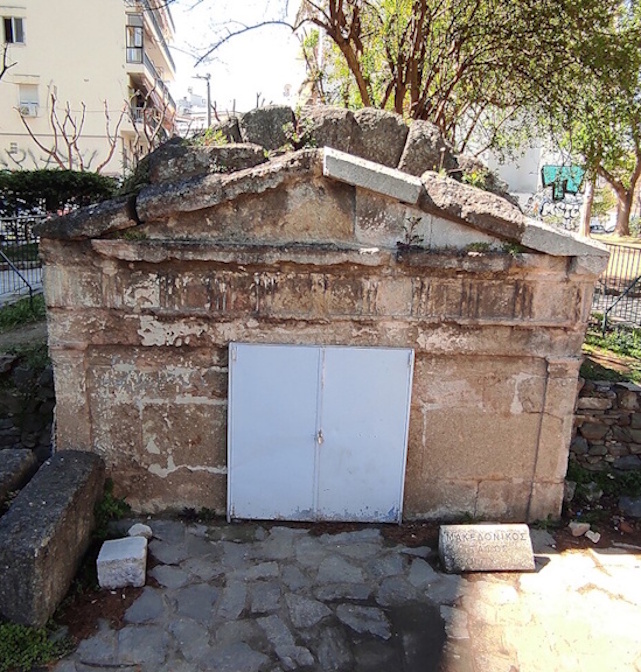
The Macedonian tomb of Maieftiriou (3rd century AD) is located at the corner of Papanastasiou and Epicourou streets. Macedonian tombs have been found in the Thessaloniki area, attesting to the wealth and artistic talent of the city's inhabitants during the Hellenistic period.
 |
 |
Left: The Macedonian tomb of the maternity hospital (3rd century AD) at the corner of Papanastasiou and Epicouroua streets.
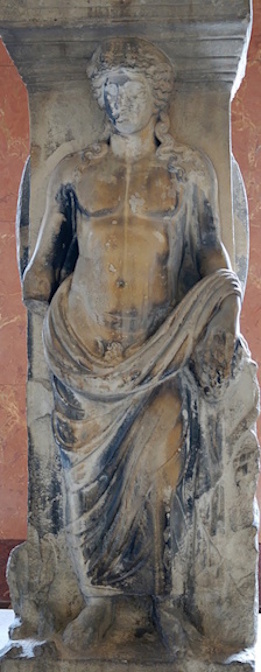
Right: One of the “Enchanted”
Roman Market
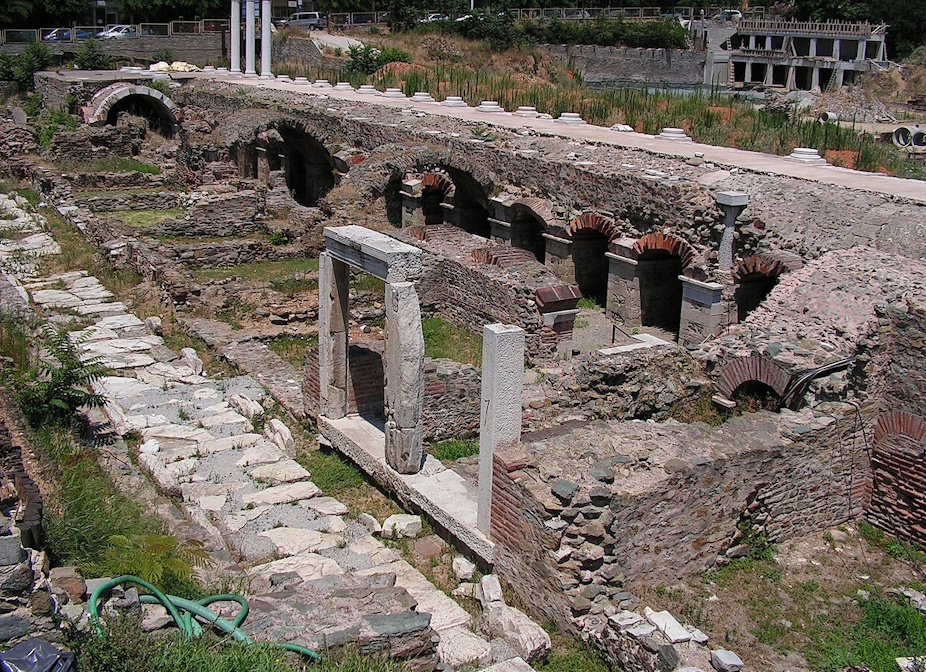
The Roman Forum (also known as the Roman Market) is a structure dating from the 2nd/3rd century AD. Its colonnade was double and adorned with relief carvings on the columns (now in the Louvre). Exhibitions are currently held in the crypt. Particularly worth seeing are the square itself, the baths, and the conservatory, which served as an open-air theater. There was also a mint and a library. In the marketplace stood a colonnade with eight idols. These statues represented Maenads, Dionysus, Ariadne, Leda, Ganymede, the Dioscuri, Aura, and Nike. They were known to the Thessalonians as "Las Incantadas" (the Enchanted Ones in Spanish-Hebrew) and were brought to the Louvre in 1864 by the French paleographer Emmanuel Miller, where they remain to this day.
Galerian complex
The Galerian complex consists of four monuments:- The Rotunda, the Pantheon of Thessaloniki, is a circular building with a diameter of approximately 24 meters. It is covered by a hemispherical dome and was built in the early 4th century AD as a temple or mausoleum of Galerius. During the reign of Emperor Theodosius, it was converted into a Christian church. Today it serves as a museum. Recent research suggests that the Rotunda was built by Constantine the Great.
- The Arch of Galerius was built shortly before 305 AD and is also known as the Kamara. Next to the surviving triumphal arch stood another of the same type, located at the point where the triumphal procession from the palace met Thessaloniki's busiest street. The reliefs depict the Roman victory over the Persians.
- The Palace of Galerius was also built in the early 4th century in the center of Roman Thessaloniki. Today, a two-story building complex with a square, open courtyard remains. The octagon is located near the southwestern edge of Galerius' Palace. The large building is decorated with marble columns and mosaic floors; it may have housed the throne room. Also preserved from the Roman palace complex are the arcaded hall, used for banquets, and the semi-basilica, which served as the emperor's official audience hall.
- The hippodrome was located next to the eastern city wall (today's Hippodrome Square). It was 500 meters long and 125 meters wide. It remained in use until the 7th century AD. It was there, in 390 AD, that the massacre of 7,000 Thessalonians took place on the orders of Emperor Theodosius. Today, Hippodrome Square not only retains its name, but with its elongated and narrow shape also refers to the Hippodrome of Thessaloniki, of which only a few parts remain, stored in the cellars of the adjacent residential buildings.
Temple of Aphrodite
The late archaic Temple of Aphrodite was originally built in the area of present-day Nea Michaniona, but in the early years of the imperial period it was moved to Thessaloniki, more precisely to the area of the sanctuaries (today the area of Diokitirio). For this reason, archaeologists classified it as a wandering temple and concluded that it was used for imperial worship. Architectural remains of the temple can be seen in Antigonidon Square (at the intersection of Krystalli and Diokitiriou streets, and Karaoli and Dimitriou streets), while many of its Ionic architectural elements are on display in the Archaeological Museum of Thessaloniki.
 |
 |
Left: View of the Roman Market
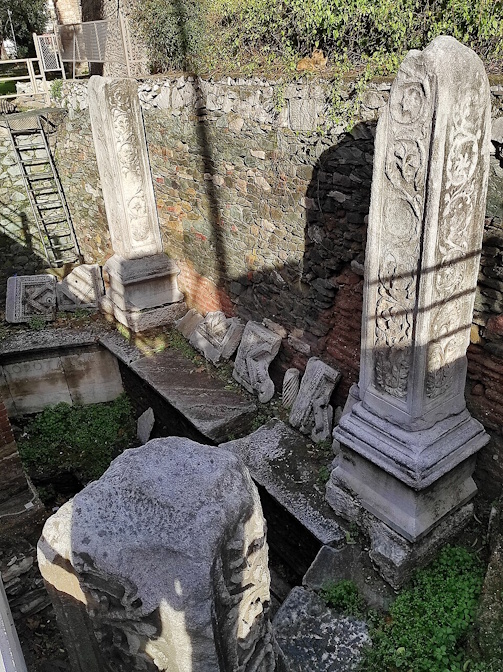
Right: Fountain building on the Via Egnatia
Other monuments
- The serpent column at the beginning of Agios Dimitrios Street.- Fountain building on the Via Egnatia (4th century AD).
- The Roman Hippodrome of Thessaloniki. It was built at the end of the 3rd century AD; today, parts of it are preserved and can be viewed in the basement of the Church of Saints Constantine and Helena of the Hippodrome.
Byzantine churches and monasteries
The Byzantine churches of Thessaloniki are an important example of ecclesiastical architecture and art from the early Christian and Byzantine periods. The most representative example is the Church of Agios Demetrios, built in the 7th century on the ruins of an older church. It was destroyed by fire, restored, and reopened after World War II.In the southeast corner of the Basilica of Agios Demetrios is the 11th-century Chapel of Agios Efthymios, with frescoes from 1303 attributed to Manuel Panselinos. Other early Christian and Byzantine churches in the city include:
- The Panagia Acheiropoietos is a three-aisled basilica built in the mid-5th century. It houses frescoes from the 13th century.
- Osios David Church, located in the upper town and dating from the 5th century, was once the Katholikon Church of the Latomos Monastery. It houses frescoes and an important mosaic depicting the vision of Ezekiel. Northeast of the church is the holy spring of Agia Zoni, where a spring emerges from a colorful rock with stalactites, forming a small pool.
- The Hagia Sophia, built in the 7th century on the site of an earlier five-aisled basilica, has a mosaic on its dome depicting the Ascension.
- The Panagia Chalkeon Church was built in 1028 and is a cruciform church with a dome. It owes its name to the fact that numerous coppersmiths were based there during the Ottoman period. Wall paintings have been preserved, mainly on the west side.
- The Church of the Redeemer was built around 1340 as a burial chapel. It is a square church with a dome. Wall paintings have been preserved.
- St. Catherine's Church was built in the 14th century in a cruciform, four-column style with a dome. Traces of frescoes can be preserved inside the church.
- The Church of the Holy Apostles dates from the early 14th century and was the main church of a monastery founded by Patriarch Niphon I. It is a five-domed church with a narthex. Significant mosaics and frescoes have been preserved inside.
- Agios Nikolaos Orphanos was built in the 14th century as a monastery church, and well-preserved frescoes have survived.
- The Church of St. Panteleimon, built in the 14th century, was once the katholikon church of a monastery. Its founder was Isaac, Metropolitan of Thessaloniki. It is a cruciform building with square columns and a dome. Some frescoes survive.
- The Vlatadon Monastery. It is a Catholic monastery and was built in the 14th century by the Metropolitan of Thessaloniki, Dorotheos Vlatis. Only the sanctuary and the main church remain of the original temple complex.
- The Church of the Prophet Elijah. It was built in the 14th century and was the main church of a monastery. Its frescoes are in poor condition.
- The Church of the Panmegasto Taxiarches is located in the upper town. It was built in the second half of the 14th century and was originally a monastery church. Only the eastern part, including the apse of the chancel, remains of the original church.
In addition to the churches mentioned above that were used in Thessaloniki, architectural remains of other churches were found during excavations, such as:
- A Christian church from the first half of the 5th century AD, probably a cemetery at a martyr's site, at the intersection of Agios Dimitrios Street and Mikis Theodorakis Avenue.
- An early Christian basilica dating from the 6th century AD is located in Xirokrini (20 Margaropoulou Street – behind the new train station). These two churches are likely connected with the commemoration of Saint Nestor or the three martyrs Agapi, Irene, and Chionia, as the martyrdom of these four saints is associated with this area.
- An early Christian church on Democracy Square was discovered during the Metro excavations and is located on the edge of the western ancient cemetery.
- The monumental early Christian octagon of Vardar, the remains of which of the large octagonal church are still visible today.
- The Palaiologian Church and its associated cemetery, containing dozens of graves and offerings, are located on the Acropolis of Thessaloniki at 5 Stergiou Polydorou Street. The fresco of the Platytera is a masterpiece from the second decade of the 14th century (1310–1320) of the church.
- A church on Syntrivani Square, discovered during the excavations of the Metro and located on the edge of the eastern cemetery.
- The remains of the church of Saint Mercury or Saint Theodore are preserved in the cellar of the present church of Saints Theodore and Anastasia of Sykea.
- A basilica that was discovered during the construction of today's 3 September Street.
-The Byzantine church of Agia Kyriaki on Egnatia Street, at what is now Democracy Square, which had been converted into a mosque, was returned to Christian worship after the liberation and ultimately burned down in the fire of 1917. The Vienna Hotel was built on its site.
- The early Christian Baptistery of St. John consists of a hexagonal building with a swimming pool in the center. It is located at the intersection of Mackenzie King, Iktinou, and Pavlou Melas streets.
Byzantine Baths
The only surviving Byzantine bath is located in Theotokopoulou Street, in the Koule Kafe, in the upper town. It dates from the late 12th to early 13th century and is covered with a dome and arches.
Byzantine water systems
Cisterns were used to collect drinking water for the city's water supply, and these have been preserved in various locations. The cistern of the Byzantine monastery of Vlatades, as well as the cistern next to the Church of the Holy Apostles (which was a monastery in Byzantine times), are still standing today. Furthermore, there are cisterns at the intersection of Olympiados and Agia Sofia streets, as well as in the basement of a modern building at 48 Tsimiski Street, where the Panagia Eleousa Monastery stood in Byzantine times. In the present-day area of Polichni, five Byzantine watermills have been preserved. These were widespread in Byzantium and of great economic importance. The watermill system stretched along the stream that originated in the Chortiatis Mountains and flowed into the Thermaic Gulf. The Byzantine fountain of Xirokrini is still preserved today and is located at 42 Didaskalissis Vasilikis Papathanasiou Street. It is a historical monument protected by the Ministry of Culture.
Other early Christian and Byzantine monuments
Northern semicircular square with a fountain in the center (6th century AD) and a fountain house at the intersection of the marble-paved Decumanus Maximus (today's Egnatia Street) and the Cardo of Agia Sophia Street. The fountain was built in the 4th century, at the same time as the reconstruction of the marble-paved Decumanus Street. It was renovated in the mid-5th century and remained in use until after the 6th century. The reconstruction of this fountain, together with the fountain on Egnatia Street, just three blocks to the east, demonstrates that in the second half of the 4th century, Thessaloniki underwent a major program of urban renewal and beautification based on ancient principles. It is the fifth known fountain in Thessaloniki. In addition to the preserved fountain in Egnatia Street, three other, smaller ones were identified in the city center: the Nymphaeum on a property at 91 Filippou Street, the fountain at the holy water of Agios Ioannis, and the original form of the later Byzantine holy water fountain in the crypt of the Basilica of Agios Demetrios.
Ottoman period
Fortification structures The White Tower dominates the port of Thessaloniki. It was built after the fall of the city to the Ottomans (1430) and was part of the city's fortifications. The tower is circular, 37 meters high, and was nicknamed the "Tower of Blood" because it was used as a guard post and prison (it served as a prison for the Janissaries). Today it serves as an exhibition space and houses the permanent exhibition about Thessaloniki from its founding in 316/15 BC to the present day. Another fortification is the Vardar Fortress, also known as Top Hane, built in 1546. It consists of a main gate tower and an octagonal tower at its southwestern end. It is located in the Vardar region, where the Axios Gate stood in Roman and Byzantine times.
Ottoman mosques
Two of the surviving mosques from the Ottoman period are the Alaçatı Imaret and the Alcázar, originally built in 1467 and rebuilt in 1620. The first building imitates Byzantine architecture in its stonework and received its name because an almshouse (imaret) was located near the mosque. The second building housed various shops and a cinema until the beginning of the 21st century; maintenance and restoration work is currently underway.Another important monument from this period is the Yeni Mosque, built in 1902 by the Italian architect Vitaliano Pozzelli. It served as a place of worship for Jewish converts to Islam, known as Dönme. The two-story building is designed in the eclectic style of the 20th century. After the expulsion of the Dönme in 1924, it housed the newly founded Archaeological Museum of Thessaloniki until the museum moved to its new building on Stratou Avenue. Today, it serves as an exhibition space.
Finally, the Lebet Mosque, built for the Muslim prisoners in the Pavlos Melas barracks, has also been preserved. The building was moved 12 to 15 meters north in the 1990s during the opening of Mikis Theodorakis Avenue (then Lagkada).
After the great fire of 1917, all of Thessaloniki's mosques were demolished, with the exception of the four mentioned previously (Alcazar, Yeni Mosque, Alatza Imaret, Lebet Mosque). In 1925, all minarets except that of the Rotunda were removed to allow for the restoration of Byzantine architecture.
Baths
In 1444, the first Ottoman bathhouse, the Bey Hamam (Loutra Paradisos), was built in Thessaloniki; it is also the largest in Greece. The building has been restored by the Archaeological Service and is open to the public. Other surviving baths from the Ottoman period include the Phoenix Baths in the Dodeka Apostoloi district, the Yahoudi Hamam (Jewish Bath) in the Louloudadika district, both dating from the 16th century, and the Yeni Hamam (also known as Aigli).
Post-Byzantine churches
In the 18th and 19th centuries (and before the liberation of 1912), churches (so-called post-Byzantine) were built in the city of Thessaloniki, such as Agios Minas, Nea Panagia, Agios Antonios, Ypapanti, Panagouda (Panagia Gorgoepikoos), Agios Charalambos, Agia Paraskevi Xirokrinis, Agios Athanasios, Panagia Laodigitria, Agios Gregory Palamas (then Agios Demetrios) and the post-Byzantine church of Agios Athanasios, which was built in Evosmos in 1818.Also during this period, churches were built that no longer exist today, as new churches were later rebuilt in their place on the same sites, such as Agios Nikolaos on the ancient Agora, a work by Maximilian Rubens from 1936 in the square of the Ancient Agora (on the site of the church of St. Nicola de Tranos, which burned down in the fire of 1917).
The following churches were built after 1950 on the sites of existing churches: Agios Konstantinos Ippodromio, Agios Hypatios (on whose site Panagia Dexia was built) and Agia Theodora.
Other monuments from the Ottoman period
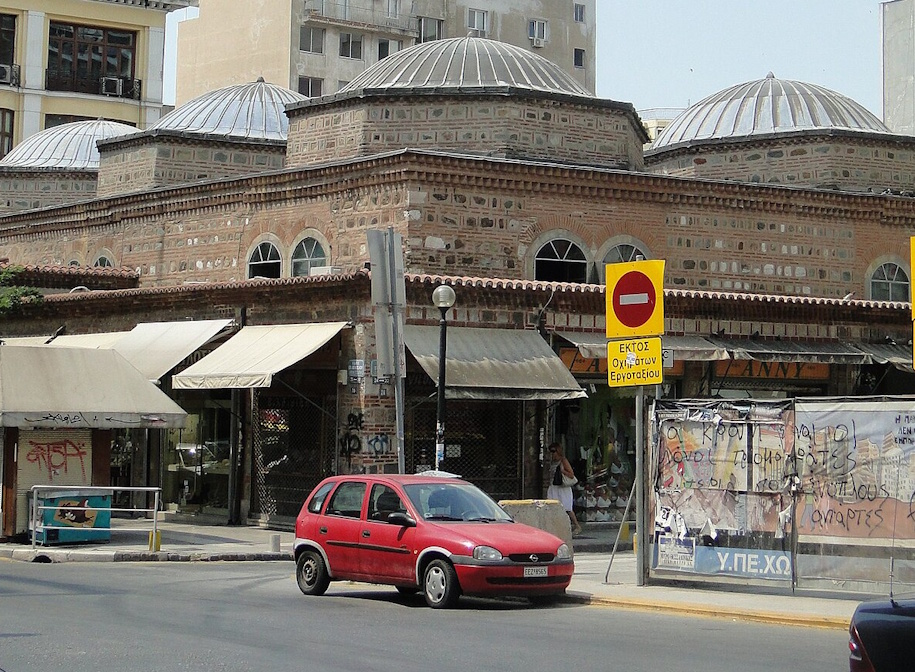
Bezesteni: Among the monuments from this period is the covered textile hall (Bezesteni), (Turkish: bezesten), which dates from the late 15th century. It is one of only two remaining Bezestenia in Greece (the other is in Serres). Small fabric shops are still housed within the Bezesteni today.Musa Baba Tomb: Located in the Upper Town (Terpsitheas Square) is the Musa Baba Tomb, an Ottoman tomb/mausoleum (turbes) dating from the 16th century. It has an octagonal shape and is the burial place of Musa Baba, a holy Muslim Baba of the Bektashi dervish order. The present-day courtyard of Terpsitheas Square was formerly the courtyard of a tekke (Bektashi dervish monastery).
The Agios Dimitrios Hospital was built around 1900, presumably according to designs by Vitaliano Poselli, characterized by absolute symmetry. The original principles are Neoclassical, though Renaissance elements were also incorporated. The historic hospital building and its surrounding grounds have been declared a protected work of art by the Ministry of Culture.
The workshop building of the Hamidiye School of Arts and Crafts. Built in 1903, it was originally part of the Ottoman-era Islahane Orphanage, founded in 1874 by the Muslim community of Thessaloniki for orphaned boys of all faiths. The school housed a carpentry shop, a machine shop, a foundry, and a blacksmith's shop where orphans learned crafts. With the liberation of the city, the building became state property, which, from 1920 onward, leased it to private individuals to operate craft businesses resembling the school's original workshops. In 1992, the Ministry of Culture declared the building and its furnishings a historical monument.
The Church of Nea Panagia: In the southeastern part of the old town, south of Tsimiski Street and not far from the sea and the White Tower, is the Church of Nea Panagia, a building with a tiled roof constructed after 1727.
 |
 |
Left: Bezesteni
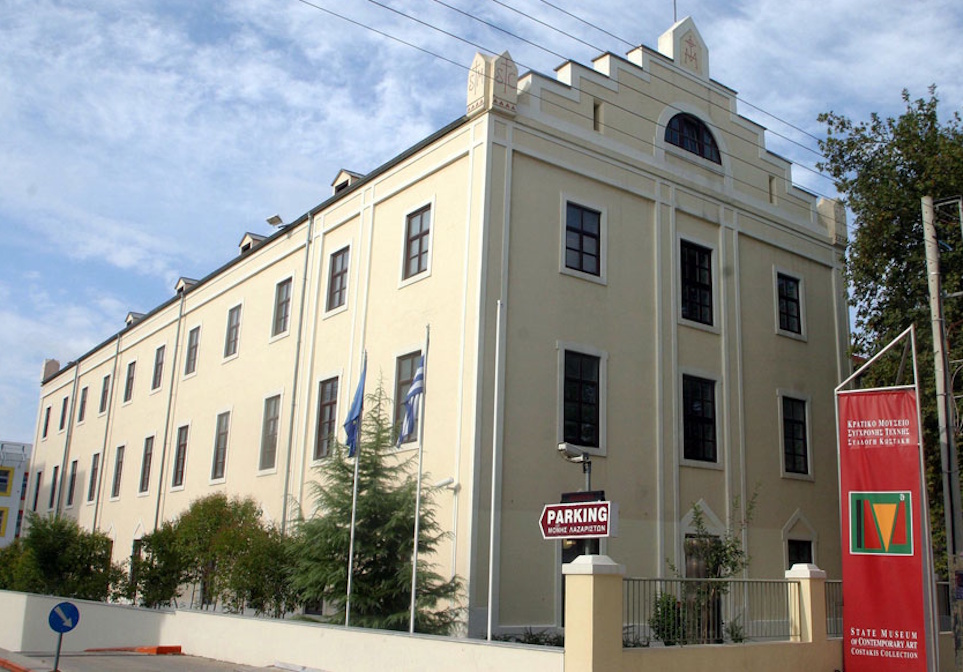
Right: Lazarist Monastery in Stavroupoli
The Lazarist Monastery, commonly known as Lazariston, was built in Stavroupoli in 1886 by monks of the Order of St. Vincent de Paul. Due to the devastation caused by an earthquake in 1978, the monastery was considered a ruin and abandoned. The building was declared a monument in 1980 due to its historical and architectural value. In 1983, the Greek state acquired it as part of the celebrations for Thessaloniki's 2300th anniversary and established it as a cultural center. It was included in the program of major projects of the "Thessaloniki 1997" organization, the European Capital of Culture. Restoration and expansion work on the original building began in 1996, and the Lazariston Monastery complex was completed in 1997. Today, the Lazariston Monastery houses the Museum of Modern Art as well as facilities of the State Theatre of Northern Greece, such as the Socrates Karantinos Theatre Stage, the Small Theatre, and the Drama School. The park-like grounds of the Lazariston Monastery are the venue for the annual Lazariston Monastery Festival, featuring concerts and events every summer. Today, the complex houses two theater stages of the State Theatre of Northern Greece, as well as the Museum of Modern Art.
Other luxurious mansions built before the city's liberation at the beginning of the 20th century include Villa Petridi, Casa Bianca, and Villa Mordoch. They have been restored and now house exhibitions and cultural activities organized by the city of Thessaloniki.
Modern monuments
The first major modern monumental urban planning intervention in the city took place after the fire of 1917. As part of the urban renewal, Aristotelous Square was created, designed by the French architect and urban planner Ernest Ebrard, whose main axis runs perpendicular to the sea and whose arcades exhibit neo-Byzantine features.The city's most famous modern building is the OTE Tower, designed by architect Alexandros Anastasiadis, located at the entrance to the Thessaloniki International Fair. It was built in 1969 to house the OTE Pavilion. Thessaloniki International Fair/Helexpo is a complex of exhibition pavilions whose buildings reflect modern architectural trends.
In Nea Paralia stands the prominent statue of Alexander the Great, erected in 1970. Hagia Sophia Square features the statue of Metropolitan Chrysostom of Smyrna, a work by Apartis. Eleftherias Square houses the Holocaust Memorial to the Jews of Thessaloniki, and on Megalou Alexandrou Avenue is the Monument to the Thracian Heroes of 1821, dedicated to Antonis and Domna Visvizis. At the southeastern end of Nea Paralia, the first building, M1, of the concert hall was constructed, incorporating Byzantine architectural elements, while building M2, designed by the Japanese architect Arata Isozaki, exemplifies a modern architectural style. Nea Paralia acquired its final form in 1972.
Among the city's most distinctive sculptures are the Fair sculpture in Fountain Square and the Umbrellas (1997) in Nea Paralia, both works by Giorgos Zongolopoulos. Also noteworthy are the Bather in the Fountain in Vasilikos Theatre Square and the Whistling Boy in Navarinou Square, both works by Nikolaos Pavlopoulos.
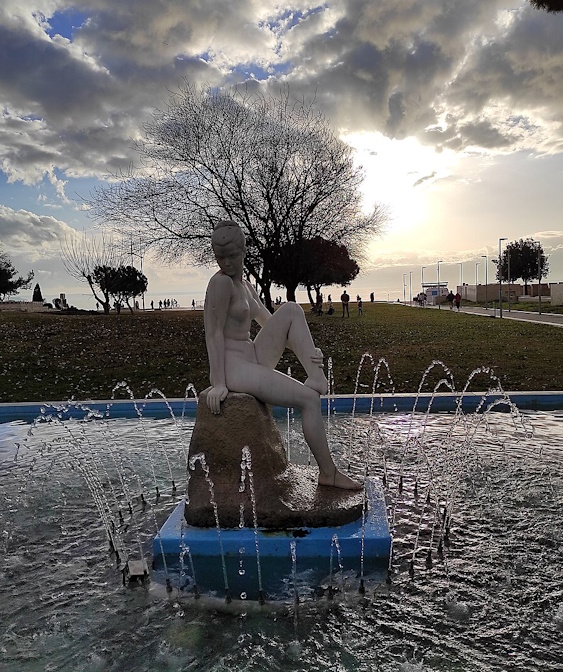 |
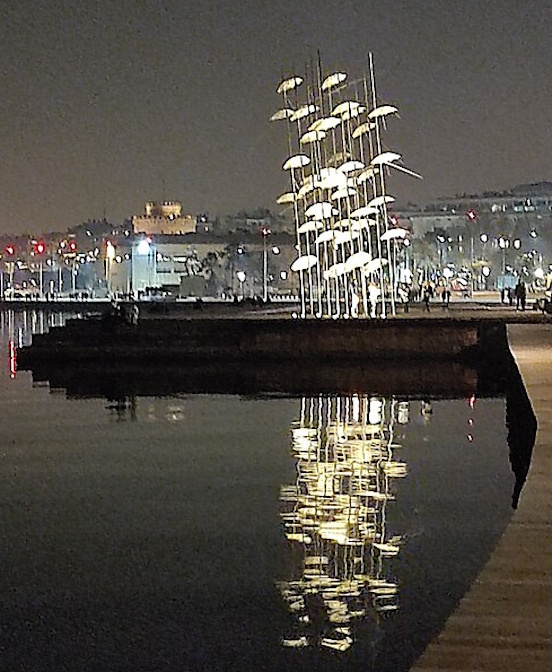 |
Left: “The Bather” (Nicolas Pavlopoulos, 1969), Royal Theatre Park
Right: "Umbrellas" by Zongolopoulos
Important modern architectural monuments include the buildings of Aristotle University of Thessaloniki, which belong to the modern architectural movement (Polytechnic School, Polytechnic School Ceremonial Hall, Faculty of Theology, Faculty of Law, Economics and Political Sciences, Central Library, Administration Building and Ceremonial Hall of Aristotle University of Thessaloniki). The buildings of the Archaeological Museum of Thessaloniki (1962 – architect: Patroklos Karantinos) and the Museum of Byzantine Culture (1994 – architect: Kyriakos Krokos) have been officially declared preserved monuments of modern heritage.
A significant chapter in Thessaloniki's history is the Molchos bookstore, the oldest in the city and at the time the only one to carry foreign books and periodicals. Founded in 1888 by Isaac Molchos, the bookstore was located in a building on Sambri Pasha Street (now Venizelou Street).
The building was destroyed by fire in 1917, and a few years later the bookstore moved to the ground floor, to the right of the entrance, in the Koffas building.
Historic cafes - restaurants
Before the fire of 1917, the historic building at the intersection of Nikis Avenue and Eleftherios Venizelos Street housed the "Great Crystal Coffee Shop" on the ground floor, while the first floor contained the club "The Circle of Salonique." The building was severely damaged in the 1917 fire, but the ground floor continued to house various businesses until its demolition in 1928.The "Olympos-Naoussa restaurant" was built in 1926 by architect Jacques Mosse at 5 Nikis Avenue. It operated from 1927 to 1994. The building is a typical example of eclecticism, with architectural and decorative elements reminiscent of the Belle Époque and Neoclassicism. A distinctive feature of the facade is the decorative medallions depicting the heads of a woman and a man.
Regarding historic cafés and pastry shops, one of the oldest is the "Dore" café and pastry shop, founded in 1908 by the Thessalonian Alfredo Moratori on Ethnikis Amynis Street. It closed after a fire in 1917 and reopened shortly afterward on the same site, designed by the Italian architect Vitaliano Pozzelli. By 1933, "Dore" was located in the area around the White Tower, and since 1995, it has operated as a zythestiatorio under the name "Doré Zythos" on Tsirogianni Street. The oldest still-operating café is To Kafantari in the Dodeka Apostoloi district, at the beginning of Agios Dimitriou Street. It was built in 1917 by Oraiopoulos, a civil engineer who constructed numerous other buildings in the area. It served as a café and a popular entertainment venue, featuring orchestras and musical groups of the time.
Historic hotels
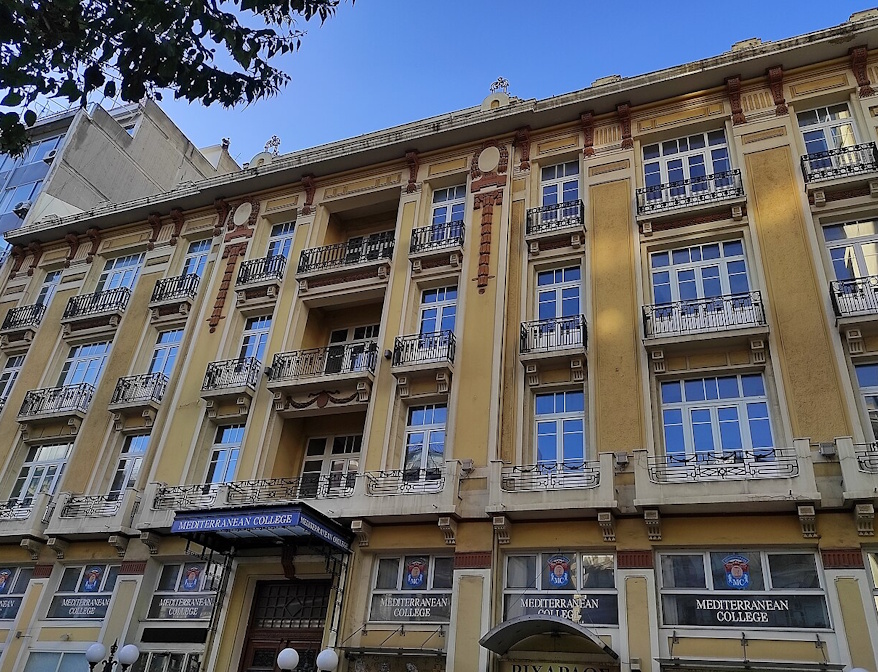 |
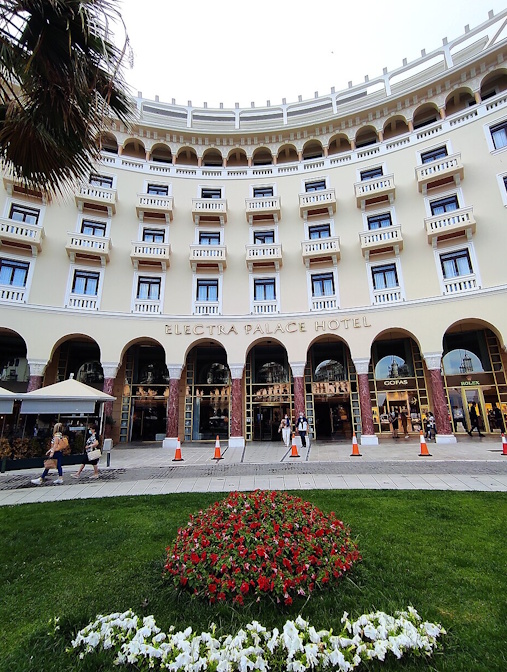 |
Left: Hotel Vienna
Right: Electra Palace Hotel
- The "Splendid" hotel was built in 1910 and destroyed by fire in 1917. In its place, the Mediterrane Hotel was built between 1922 and 1926 according to designs by Marinos Delladetsimas; it was damaged in the 1978 earthquake and subsequently demolished.
- Hotel "Vienna", 1929–1931, Architect: Georgios Kambanellos, Egnatia 2-4.
- Hotel "Kinissi Palace" (formerly "Modern"), Architect: M. Vasiliou 1920 & K. Kokoropoulos-I. Zachariadis 1924, Egnatia Ecke Syggrou.
- Hotel "Columbus", 1922, Architect: Eleftherios Paikos, Leontos Sofou, corner of Valaoritou.
- Hotel “Augustus”, 1923, architect: Xenophon Paionidis, Svorono corner Ptolemaion.
- Hotel "Nea Metropolis", 1924, Architect: I. Dimitriadis, Syggrou Corner Ptolemaion.
- Hotel "Andromeda" (formerly Continental), 1929, Architect: Jacques Mosse, Komninon corner Kalapothaki 5.
- Hotel "Emporikon", 1935, Architect: Dimitrios Varveris, Syggrou 14 corner of Egnatia.
- Hotel “Electra Palace”, 1962, architect: F. Vokos, Aristotle Square.
- "City" Hotel, 1963, Architects: Gabriel Vagianos and Achilleas Miniatis, 11 Komninon Street.
- Hotel “Macedonia Palace” (Doxiadis Office, 1962–1971), Nea Paralia.
Historic cinemas
- The "Olympion" cinema, originally known as the "Olympia" variety theater, was built after 1911 and was the first cinema in the Balkans. It was located on the coastal road, between Eleftherias Square and the Hotel "Splendid".- Cinema “Dionysia”, built in 1925, architect: Leonardo Zenari, Agia Sophia Street, The cinema with the facade of an ancient Egyptian temple, a particularly popular theme at the time, was closed in the early 1970s and demolished in 1973.
- “Makedonikon” cinema, built in 1930, architect: Georgios Manousos, Dim. Margariti 5 corner Fil. Etaireias 24.
- “Elysia” cinema, built in 1930, architect Leandros Zoidis, Fanariotes Square.
- Apollo Cinema, 42 Vas. Georgiou St., architect Pietro Arrigoni, Thessaloniki (demolished).
- Ilion Cinema. Democracy Square. It operated under the name "Splendit" from 1926 to 1997 and under the name "Ilion" from 1936 to 1997 (demolished).